
For New Jersey practice managers
Medical office cleaning checklist, by room and by who does it.
Your cleaner takes floors, restrooms, ordinary trash and high-touch surfaces. Clinical staff keep work between patients, medical equipment, procedure surfaces and, unless your plan says otherwise, blood spills. In New Jersey, sharps and biohazard bags never go in the trash; apart from narrow exemptions, a registered medical waste transporter takes them.
The caveat: OSHA sets triggers (after procedures, after spills, end of shift), not a daily, weekly or monthly timetable. Each employer with blood exposure writes its own schedule, so our timings are a starting point. OSHA 1910.1030(d)(4)
The split
Four owners, and most rooms have more than one.
A room name does not settle who cleans it. A crew that comes after closing cannot do anything that has to happen between patients, after a procedure or right after a spill, so those jobs stay with whoever is in the building at the time.
- Cleaning crew
- Floors, restrooms, breakrooms, ordinary trash and the high-touch surfaces in rooms your staff have released to them.
- Clinical staff
- Exam table turnover, reusable equipment, sharps and sorting waste, plus work surfaces after a procedure. OSHA requires contaminated work surfaces to be decontaminated after procedures, immediately or as soon as feasible after a spill, and at the end of the shift if they may have been contaminated since the last cleaning.OSHA 1910.1030(d)(4)(ii)(A)
- Practice manager
- The written schedule, the product list, the spill plan, who can reach the waste storage area, and New Jersey's waste paperwork. CDC's outpatient checklist asks whether written cleaning policies identify the responsible personnel.CDC outpatient guide, Appendix A
- Registered waste hauler
- Apart from a few narrow exemptions, regulated medical waste leaves with a transporter registered in New Jersey as a medical waste transporter and as a solid waste transporter, holding a certificate of public convenience and necessity.N.J.A.C. 7:26-3A.16(d)3A.27(c)
The checklist
Print it, then walk it with your cleaner.
Filter by owner to print one copy for the crew and another for your clinical team. If your crew comes fewer than five nights a week, the daily crew rows still need an owner on the other days.
How to read the Basis column
- OSHA and NJ rule mark what a rule requires, and OSHA FAQ marks OSHA’s published reading of its rule. If the rule gives no interval, the interval shown is our suggestion.
- CDC and EPA mark federal guidance on what to do or how. The timing is our suggestion.
- Suggested is our starting point. No rule we reviewed sets it, so change it to fit your patient volume.
CDC says frequency is set by facility policy, with high-touch surfaces in patient-care areas cleaned more often than low-touch ones. Its published room-by-room timing tables were written for facilities with limited resources, and CDC directs U.S. facilities to other guidance, so we did not borrow them.
CDC Environmental ServicesCDC note on its timing tables49 tasks shown. Printing includes only what is shown.
Medical office cleaning checklist
Practice: ______________________ Week of: ___________ Reviewed by: ___________
Reception and waiting room
| Task | Who | Basis | Date / initials |
|---|---|---|---|
| Daily | |||
| Wipe door handles, light switches, chair arms and the check-in counter.Cleaning crewCDC | Cleaning crew | CDC | |
| Empty ordinary trash and replace the liners.Cleaning crewSuggested | Cleaning crew | Suggested | |
| Vacuum carpet or damp-mop hard floors, last of all.Cleaning crewSuggested | Cleaning crew | Suggested | |
| Weekly | |||
| Spot-clean walls, doors and entrance glass.Cleaning crewCDC | Cleaning crew | CDC | |
| Monthly | |||
| Clean blinds and dust vents and light covers, sooner if visibly soiled.Cleaning crewCDC | Cleaning crew | CDC | |
Exam rooms
The crew starts only after clinical staff release the room.
| Task | Who | Basis | Date / initials |
|---|---|---|---|
| Every patient or procedure | |||
| Change the table paper and wipe the exam table, armrests and stool.Clinical staffSuggested | Clinical staff | Suggested | |
| Clean and disinfect reusable equipment that touches intact skin, such as blood pressure cuffs, following the manufacturer's instructions.Clinical staffCDC | Clinical staff | CDC | |
| Decontaminate any work surface contaminated with blood or other potentially infectious material, after the procedure.Clinical staffOSHA (d)(4)(ii)(A) | Clinical staff | OSHA (d)(4)(ii)(A) | |
| Daily | |||
| Close out the room: used instruments, specimens and clinical supplies put away, then release it to the crew.Clinical staffSuggested | Clinical staff | Suggested | |
| Wipe counters, sink, faucet, cabinet pulls, door handles and light switches with an EPA-registered disinfectant, keeping them wet for the full label contact time.Cleaning crewEPA | Cleaning crew | EPA | |
| Empty ordinary trash only. Leave sharps containers and biohazard bags to the staff your practice authorizes.Cleaning crewSuggested | Cleaning crew | Suggested | |
| Damp-mop the floor last, with detergent and water unless your plan says otherwise.Cleaning crewCDC | Cleaning crew | CDC | |
| Weekly | |||
| Wipe the table base, stool legs, cabinet fronts and door frames.Cleaning crewSuggested | Cleaning crew | Suggested | |
| Monthly | |||
| Clean blinds and dust vents, light covers and cabinet tops, sooner if visibly soiled.Cleaning crewCDC | Cleaning crew | CDC | |
Procedure and treatment rooms
Skip this table if you do no procedures on site.
| Task | Who | Basis | Date / initials |
|---|---|---|---|
| Every patient or procedure | |||
| Decontaminate contaminated work surfaces with an appropriate disinfectant after each procedure, and immediately or as soon as feasible after a spill.Clinical staffOSHA (d)(4)(ii)(A) | Clinical staff | OSHA (d)(4)(ii)(A) | |
| Replace protective coverings as soon as feasible when they become overtly contaminated.Clinical staffOSHA (d)(4)(ii)(B) | Clinical staff | OSHA (d)(4)(ii)(B) | |
| Daily | |||
| End of shift: decontaminate any work surface that may have become contaminated since the last cleaning, and replace any covering that may have been contaminated during the shift.Clinical staffOSHA (d)(4)(ii)(A)-(B) | Clinical staff | OSHA (d)(4)(ii)(A)-(B) | |
| After staff release the room, clean the floor and any non-clinical surfaces named in your plan.Cleaning crewSuggested | Cleaning crew | Suggested | |
Lab, sterilization and medication areas
Keep the crew's work here short and written down.
| Task | Who | Basis | Date / initials |
|---|---|---|---|
| Daily | |||
| Clean and disinfect work surfaces, the sterilizer, medication refrigerator and specimen areas.Clinical staffSuggested | Clinical staff | Suggested | |
| Mop the floor and empty ordinary trash, only after staff clear the area.Cleaning crewSuggested | Cleaning crew | Suggested | |
| Weekly | |||
| Inspect and decontaminate reusable bins and pails likely to become contaminated, and clean them immediately or as soon as feasible if visibly contaminated.Clinical staffOSHA (d)(4)(ii)(C) | Clinical staff | OSHA (d)(4)(ii)(C) | |
Restrooms
| Task | Who | Basis | Date / initials |
|---|---|---|---|
| Daily | |||
| Name someone to check supplies and visible soiling during patient hours.Practice managerSuggested | Practice manager | Suggested | |
| Clean and disinfect toilets, sinks, faucets, dispensers, door hardware and the wall around the toilet.Cleaning crewCDC | Cleaning crew | CDC | |
| Restock soap, paper towels and toilet tissue.Cleaning crewSuggested | Cleaning crew | Suggested | |
| Empty trash and sanitary bins. OSHA expects sanitary bins to be lined so no one touches the contents.Cleaning crewOSHA FAQ 7 | Cleaning crew | OSHA FAQ 7 | |
| Mop the floor last.Cleaning crewSuggested | Cleaning crew | Suggested | |
| Weekly | |||
| Scrub grout, tile walls and the base of fixtures.Cleaning crewSuggested | Cleaning crew | Suggested | |
| Monthly | |||
| Dust vents, partition tops and light covers.Cleaning crewSuggested | Cleaning crew | Suggested | |
Hallways, breakroom and offices
| Task | Who | Basis | Date / initials |
|---|---|---|---|
| Daily | |||
| Wipe door handles and handrails, then the breakroom tables, counters and sink.Cleaning crewSuggested | Cleaning crew | Suggested | |
| Empty ordinary trash and clean the floors.Cleaning crewSuggested | Cleaning crew | Suggested | |
| Weekly | |||
| Wipe appliance fronts and the inside of the microwave.Cleaning crewSuggested | Cleaning crew | Suggested | |
| Assign the refrigerator contents and dishes to your own staff.Practice managerSuggested | Practice manager | Suggested | |
| Monthly | |||
| Vacuum upholstered seating and dust high surfaces in offices.Cleaning crewSuggested | Cleaning crew | Suggested | |
Medical waste (New Jersey)
None of these rows belong to the cleaning crew. Narrow exemptions in N.J.A.C. 7:26-3A.16(b) and 3A.17 can change the transport and tracking rows.
| Task | Who | Basis | Date / initials |
|---|---|---|---|
| Every patient or procedure | |||
| Discard contaminated sharps, such as used needles and scalpel blades, immediately or as soon as feasible into a container that is closable, puncture resistant, leakproof on the sides and bottom, and labeled or color-coded.Clinical staffOSHA (d)(4)(iii)(A)(1) | Clinical staff | OSHA (d)(4)(iii)(A)(1) | |
| As far as practicable, separate regulated medical waste into sharps, fluids over 20 cc and other regulated medical waste.Clinical staffNJ rule 3A.10 | Clinical staff | NJ rule 3A.10 | |
| Daily | |||
| Check each sharps container is upright, easy to reach, as close as feasible to where sharps are used, and not overfilled.Clinical staffOSHA (d)(4)(iii)(A)(2) | Clinical staff | OSHA (d)(4)(iii)(A)(2) | |
| Secure every container used to collect sharps so no unauthorized person, including an after-hours visitor, can reach the contents.Practice managerNJ rule 3A.12(c) | Practice manager | NJ rule 3A.12(c) | |
| Weekly | |||
| Check the waste storage area: access limited to authorized employees, packaging intact, no odor.Practice managerNJ rule 3A.12(a)-(b) | Practice manager | NJ rule 3A.12(a)-(b) | |
| Every waste pickup | |||
| Offer waste only to a registered medical waste transporter, unless one of the narrow exemptions applies.Practice managerNJ rule 3A.16(d), 3A.27(c) | Practice manager | NJ rule 3A.16(d), 3A.27(c) | |
| Complete the New Jersey tracking form, sign it by hand, get the transporter's signature, and keep your copies for at least three years.Practice managerNJ rule 3A.19(d), 3A.21(a) | Practice manager | NJ rule 3A.19(d), 3A.21(a) | |
| Chase the signed form if it is not back within 35 days. File an exception report if it is not back within 45, or 60 for a consolidated load.Practice managerNJ rule 3A.22 | Practice manager | NJ rule 3A.22 | |
| Sign the tracking form when accepting the waste.Waste haulerNJ rule 3A.19(d)(3) | Waste hauler | NJ rule 3A.19(d)(3) | |
| Yearly | |||
| Keep your NJDEP medical waste generator registration current and pay the annual fee.Practice managerNJ rule 3A.8(a) | Practice manager | NJ rule 3A.8(a) | |
| File the annual generator report by July 21 if you generated more than 200 pounds from June 22 to June 21.Practice managerNJ rule 3A.21(d) | Practice manager | NJ rule 3A.21(d) | |
The plan behind the checklist
| Task | Who | Basis | Date / initials |
|---|---|---|---|
| Monthly | |||
| Spot-check the crew's work against this list.Practice managerCDC | Practice manager | CDC | |
| Yearly | |||
| Update the written cleaning schedule: location, surface, soil and procedure, task by task.Practice managerOSHA (d)(4)(i) | Practice manager | OSHA (d)(4)(i) | |
| Name who cleans each item and who responds to a blood or body fluid spill.Practice managerCDC | Practice manager | CDC | |
| List disinfectants by EPA registration number, with label contact times.Practice managerEPA | Practice manager | EPA | |
| Review and update the exposure control plan at least annually, and whenever tasks or positions with exposure change.Practice managerOSHA (c)(1)(iv) | Practice manager | OSHA (c)(1)(iv) | |
The hard calls
Where a checklist stops and a decision starts.
Blood on the floor, found after hours
OSHA requires decontamination immediately or as soon as feasible after any spill of blood or other potentially infectious material. Its published FAQ names cleaning blood spills as a housekeeping task that can cause occupational exposure, and leaves each employer to decide which jobs involve exposure. Employees with occupational exposure must get training and protective equipment at no cost, and the hepatitis B vaccine must be made available to them unless they are already vaccinated or immune, or it is medically contraindicated. Settle this in writing first: either the crew is trained and equipped for spills, or the crew closes off the area and calls the person you named.
OSHA (d)(3)(i), (d)(4)(ii)(A), (f)(1)(i), (f)(2)(i), (g)(2)(i)OSHA FAQ 7Broken glass or a loose needle
Broken glassware that may be contaminated must not be picked up directly with the hands. OSHA requires mechanical means, such as a brush and dustpan, tongs or forceps. Contaminated sharps must be discarded immediately or as soon as feasible into a container that is closable, puncture resistant, leakproof on the sides and bottom, and labeled or color-coded (OSHA accepts a red container in place of a label), so a crew member who finds a loose needle should stop and call your named contact unless your plan says otherwise.
OSHA (d)(4)(ii)(D), (d)(4)(iii)(A)(1), (g)(1)(i)(E)A product labeled hospital grade
The EPA label decides, not the marketing. CDC says to choose EPA-registered products with label claims for healthcare use. EPA says a surface should stay visibly wet for the whole contact time, and the registration number is the only way to identify a product accurately. For surfaces contaminated with blood, OSHA accepts EPA-registered tuberculocidal disinfectants, diluted bleach solutions, EPA-registered disinfectants labeled effective against both HIV and HBV, and FDA-cleared sterilants or high-level disinfectants, unless the contamination calls for higher-level disinfection.
CDC outpatient guideEPA disinfectant labelsOSHA FAQ 35A checklist that cites EPA List D or List E
Those lists are retired. EPA consolidated Lists C, D, E and F into List S, its list of products effective against bloodborne pathogens (HIV, hepatitis B and hepatitis C).
EPA, retired listsEPA List SWhether the floors need disinfectant
Usually not. CDC reports that disinfecting floors offers no advantage over regular detergent and water, and has minimal or no effect on healthcare-associated infections. A practice or its cleaning company may still choose an EPA-registered detergent-disinfectant for patient-care floors, because it can be hard to tell whether a spill contains blood or body fluids, or when a multidrug-resistant organism is likely to be present. CDC also does not recommend disinfectant fogging for general infection control in routine patient-care areas.
CDC Environmental ServicesNew Jersey
What New Jersey’s medical waste rules add.
Under N.J.A.C. 7:26-3A, these are the classes of regulated medical waste a medical office is most likely to produce. Clinical staff make the call on what falls in a class. The cleaning crew never does.
| Class | What it covers |
|---|---|
| Class 1, cultures and stocks | Cultures from medical labs and discarded live and attenuated vaccines. |
| Class 2, pathological waste | Tissue removed during procedures, and specimens of body fluids with their containers. |
| Class 3, human blood | Liquid blood and items saturated or dripping with blood, including those now caked with dried blood. |
| Class 4, sharps | Used needles, syringes, scalpel blades and blood vials, plus glassware that touched infectious agents, such as used slides. |
| Class 6, isolation waste | Waste from patients isolated to protect others from certain highly communicable diseases. |
| Class 7, unused sharps | Discarded needles, suture needles, syringes and scalpel blades that were never used. |
A biohazard bag makes it medical waste.
Anything packaged in a bag labeled Biohazard or carrying the universal biohazard symbol is presumed potentially infectious and must be managed as regulated medical waste for transport and disposal. If other waste goes into the same container, the entire contents are managed as regulated medical waste, and ordinary waste must not be packed inside a medical waste container. So keep biohazard bags out of ordinary bins and off the crew's cart.
N.J.A.C. 7:26-3A.11(e)-(f)3A.10(d)The crew cannot take it out with the trash.
Anyone offering regulated medical waste for transport must use a registered medical waste transporter. The exemptions are narrow: a generator of under 50 pounds a month carrying only its own waste in its own vehicle, mailing sharps by the U.S. Postal Service within the same limit, collection inside one property by a registered collection facility, and transport between facilities one generator wholly owns. Each has its own conditions, and none covers a cleaning company carrying your waste away.
3A.16(d)3A.17(a), (b), (d)3A.27(e)The waste room is not on the crew's route.
New Jersey limits access to on-site storage areas to authorized employees, requires outdoor storage areas to be locked, and requires any container used to collect sharps to be secured so no unauthorized person can reach the contents. That matters most after hours, when the crew is alone with your exam rooms. Waste must be disposed of within one year of generation, unless it is being held for radioactive decay, and immediately if it becomes putrescent or gives off any odor.
3A.12Small and shared practices still count.
Anyone that generated regulated medical waste in New Jersey must register with NJDEP as a generator and pay an annual fee, and the lowest fee category covers under 50 pounds a year. Separate medical practices in the same building and office are separate generators.
3A.8(a)3A.5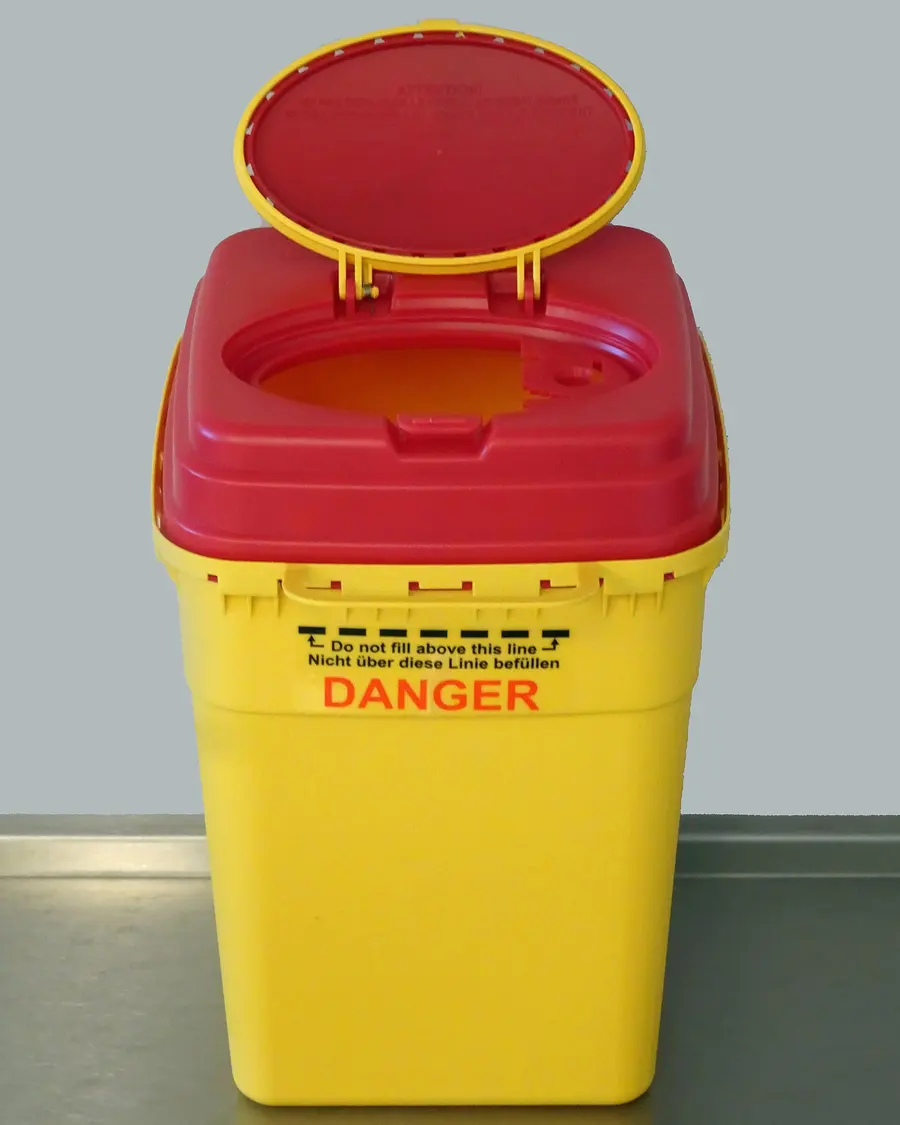
Before your next cleaner starts
Get these five answers in writing.
OSHA’s published FAQ, answering a company that supplies contract employees to healthcare facilities, calls their protection a shared responsibility. The client facility has the primary responsibility for controlling exposure and, for example, provides site-specific training and protective equipment, while the contract company provides general training, vaccinations and follow-up after an exposure. OSHA adds that contracts should clearly describe the responsibilities of both parties. Walk the checklist room by room with any cleaner you are considering, then write the answers down.
OSHA FAQ 5- The exact surfaces the crew cleans in exam and procedure rooms, named one by one.
- What counts as a released room, and who releases it.
- Which disinfectants are used, by EPA registration number, and who supplies them.
- Who responds to blood or body fluid, and whether the crew has the training, protective equipment and hepatitis B vaccine offer OSHA requires for that task.
- A plain statement that the crew does not touch sharps containers, biohazard bags or the waste storage area.
Where Neustiq fits
We clean medical offices in Middlesex, Union and Somerset counties and parts of Essex County, on evening, overnight or weekend schedules planned around patient hours. Every plan is built from a free walkthrough of your facility, so bring this checklist to that visit and use it to set the scope. Our founder’s background is in healthcare leadership and operations, and Neustiq Commercial Cleaning LLC is insured. Hauling regulated medical waste is not on our service list.
See what our medical office cleaning coversRunning a dental practice? Operatories divide up differently, so start with dental office cleaning. Towns we cover are on the service area page.
Free quote and walkthrough
Get a cleaning plan built around your patient hours.
Request a free, no-obligation quote. We'll schedule a walkthrough and build a cleaning plan around your space, your schedule and your budget.
Quote requests accepted online 24/7. No account needed.
Sources
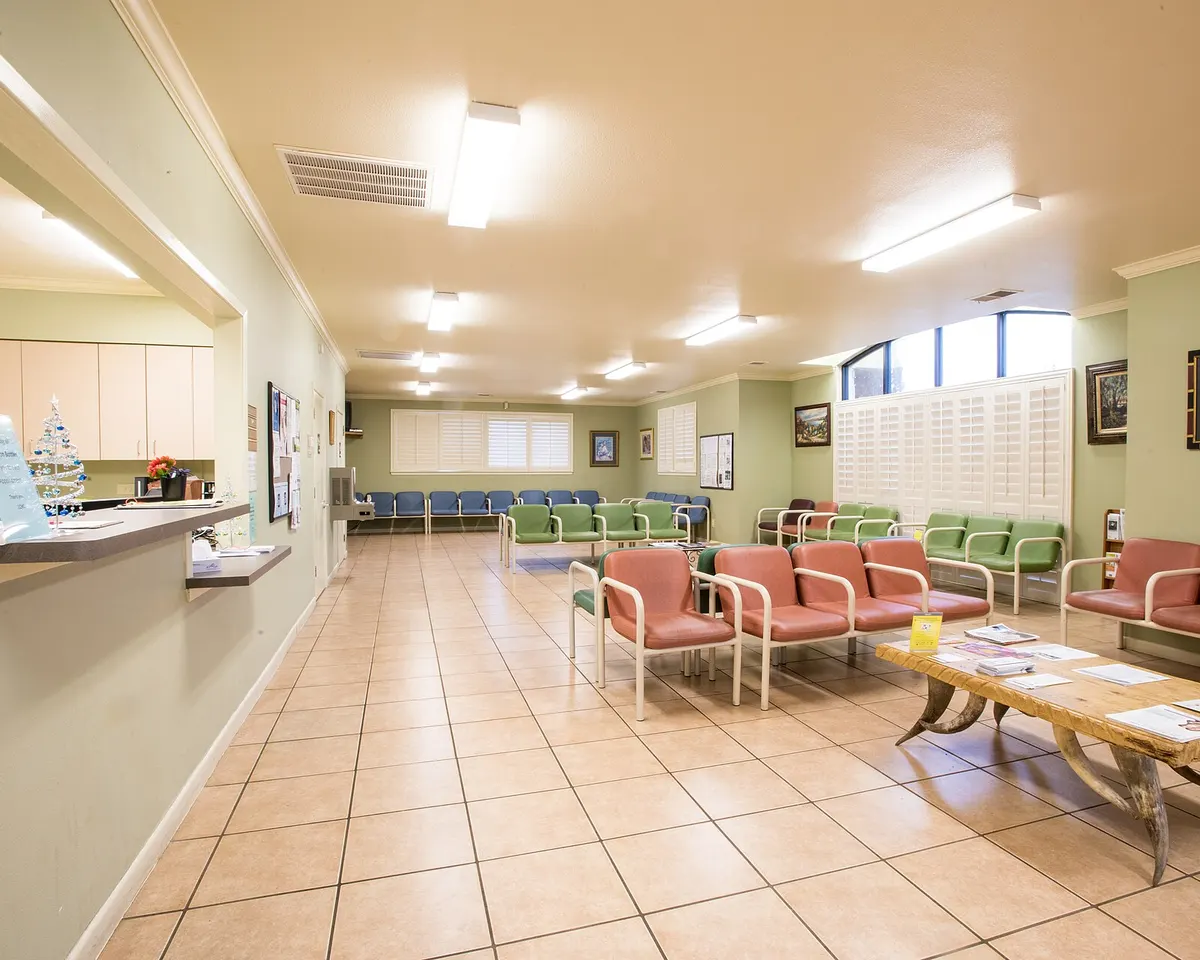
All sources were checked on November 8, 2026. This page is general information, not legal advice. We reviewed the rules listed here. A state-licensed ambulatory care facility may have further requirements that we did not review. The waiting room photo at the top shows a community health center in Lytle, Texas, not a client facility: USDA photo by Lance Cheung, public domain, via Wikimedia Commons.